Delirium & deep sedation are a HUGE problem in the ICU At Hopkins over the weekend, we heard first hand from a patient bravely recalling his experience of delirium while being treated in the ICU and much of what he remembers is terrifying! We learned that 20-80% of ICU patients develop delirium at some point and it is often … Continue reading

Filed under I do learn things in PT school …
I like to move it, move it
After my long post yesterday, I’m sure you all are curious to hear a bit more about early rehabilitation in the ICU. Why is it so important ? Well, try these stats on for size: By 2026, the anticipated need for mechanical ventilation will increase 80% (1) Bed rest is associated with loss of strength … Continue reading
Hey baby, how about some O2 rich blood! Ahhhh
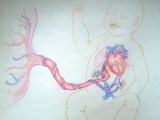
Sometimes I like to draw on things that aren’t cylindrical: In preparation for our pediatrics exam yesterday morning, I decided delve a little deeper into fetal circulation. So these little guys have circulation way more complicated in the womb than after they are born. This is because mom (and her placenta) are doing the work for the baby’s lungs. … Continue reading
Mr. T-Spine says:
…that doesn’t know PIVMs are physiologic or osteokinematic motion & PAiVMs are arthrokinematic motion. Mr. T is so awesome, I couldn’t resist…but now back to my regularly schedule midterm early am study routine.
Provocational mobilizations are a pain in the butt…
OSCE #3 tomorrow featuring the cervical and thoracic spine is quite a daunting prospect. My classmates and I have had our plates full this midterm week and we’ve got to end it with a pretty scary practical. However, I have the utmost confidence that we will rock it, as always! Here is a little tip: … Continue reading
Sister bear learns a new motor skill…
Motor learning is something we deal with a lot in physical therapy. What is it exactly? Well, basically motor learning is a “relatively permanent” change from practice of a of a motor skill. Consider things like smoothness & accuracy of movement needed for things like walking, speaking, biking….we take them for granted but remember that first … Continue reading
Totally RAD(iculopathy)
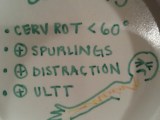
Clinical Prediction Rules can can be pretty useful tools (when used with a great subjective history and physical exam of course) Take the CPR for Cervical Radiculopathy for instance (visit physiopedia for some videos) If a patient is presenting with 3 out of these four signs there is a 94% specificity, and goes up to … Continue reading
Girl, I like your flow [chart]
Working with a patient with neck problems? Get your Canadian Cervical Spine Rules on to determine if you need to send them for an x-ray. With such a high sensitivity, you can be confident that if they clear the c-spine rules that they don’t require an x-ray. This allows physicians in the emergency department to … Continue reading
Moving On Up…
…The Brain That Is When visualizing the brain using a CT (computed tomography) there are some cute images that help you understand where in the brain you are looking: Totally looks just like it right ? (From my wonderful professor Dr. Linberg’s lectures, hover over pics for caption):
Thera-pony
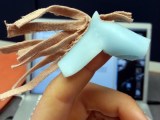
Sometimes I get a little silly. (ok, I often get a little silly)…if it isn’t a test week, Pediatrics gives the right side of my brain lots of opportunity to play and express itself: We learned all about bracing, splinting, and taping in the pediatric population today…this little finger puppet is made from Aquaplast and … Continue reading